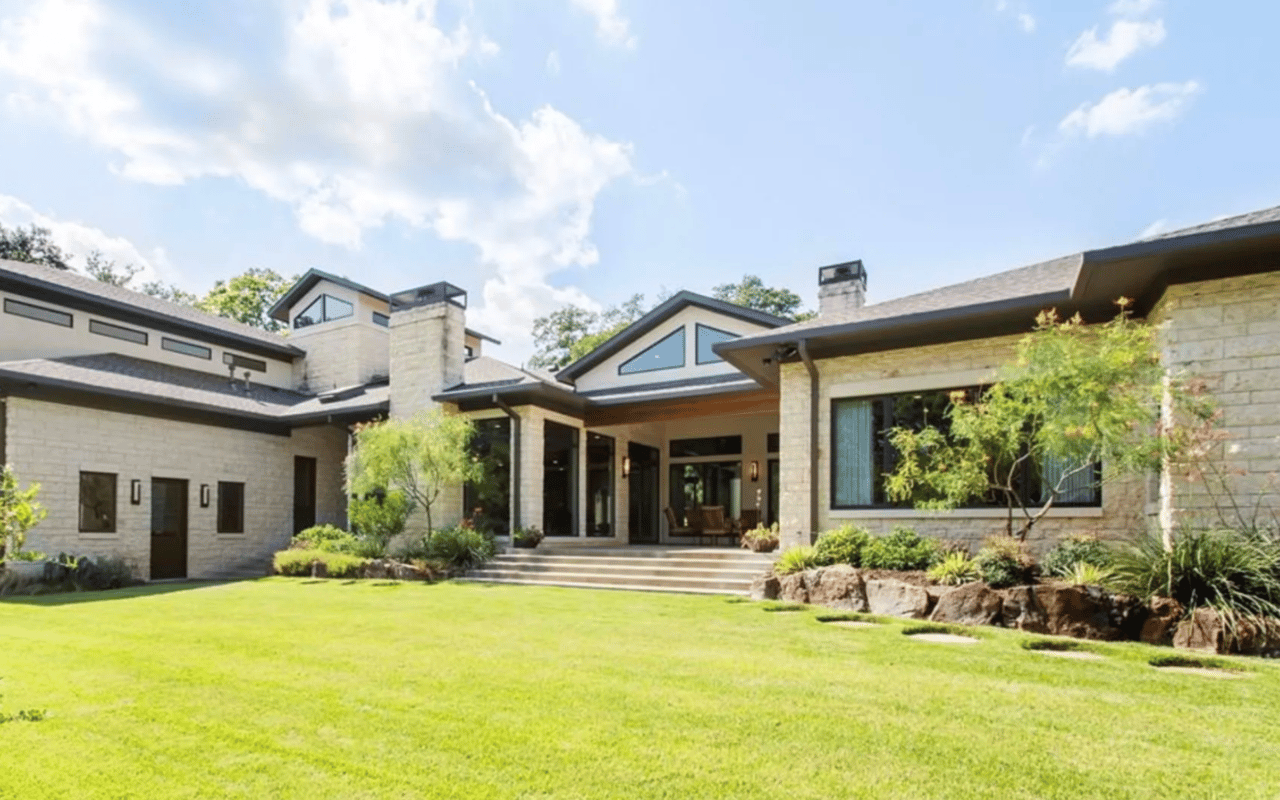
In spring 2025, a couple who were finishing a Tudor renovation near the M Streets went to an open house in Eastwood Estates. They had no plans to buy. The house was one of two Ju-Nel A-frames. It had 2,569 square feet and three bedrooms, and it had not been on the market in 53 years. As the Lake Highlands Advocate told it, the house already had "a slew of bids," and another bidding war sounded exhausting. Then one of them sat on the edge of the bed in the primary bedroom, looked through a wall of glass at the original 9-foot 1960s pool, and changed her mind. The listing was still active the following Monday, so they texted the realtor. They bought it in May 2025 and moved in that June.
That house had two owners in 63 years, and plenty of other Ju-Nels have a similar history. Many of the Ju-Nels listed since late 2024 came from owners who had held them for 50 years or more, and one in Lochwood was marketed outright as ready for a makeover. The 2026 market gives buyers more room on a typical Dallas listing than they have had in years. On a Ju-Nel, that room shows up somewhere else: in the gap between the asking price of a house that needs a renovation and one that already had it.
The 2026 Market Mostly Favors Buyers, With a Few Exceptions
The wider market sets the baseline. In September 2026, Dallas County single-family homes sold at a $360,000 median after a median 50 days on market, at 93.9% of list price, with 4.1 months of inventory, according to the MetroTex NTREIS monthly report. That is a market where buyers take their time.
D Magazine's September 2026 market story described the same picture: high inventory, homes sitting longer, and sellers cutting prices. It also found exceptions. An agent who works East Dallas, Lakewood and Lake Highlands told the magazine that sales in those neighborhoods are much stronger than elsewhere because "You can't build more in those neighborhoods. The lots are spoken for." The same story added a caveat from another agent: homes that haven't had much work in 15 to 30 years "might still be nice, but they're harder to sell."
A Ju-Nel tests both points at the same time. It is the scarcest kind of house in the neighborhood. Many of them are also exactly the kind of house that hasn't been touched in decades.
How Scarce They Are
Lyle Rowley and Jack Wilson worked for the modernist Howard Meyer before going out on their own. They named their company Ju-Nel after their wives. According to D Magazine's 2024 report on the new Ju-Nel archive, local coverage had long put the count at about 50 homes. Researcher Mark Weeks has since authenticated 147. The same report found that six had been demolished and many others remodeled beyond recognition.
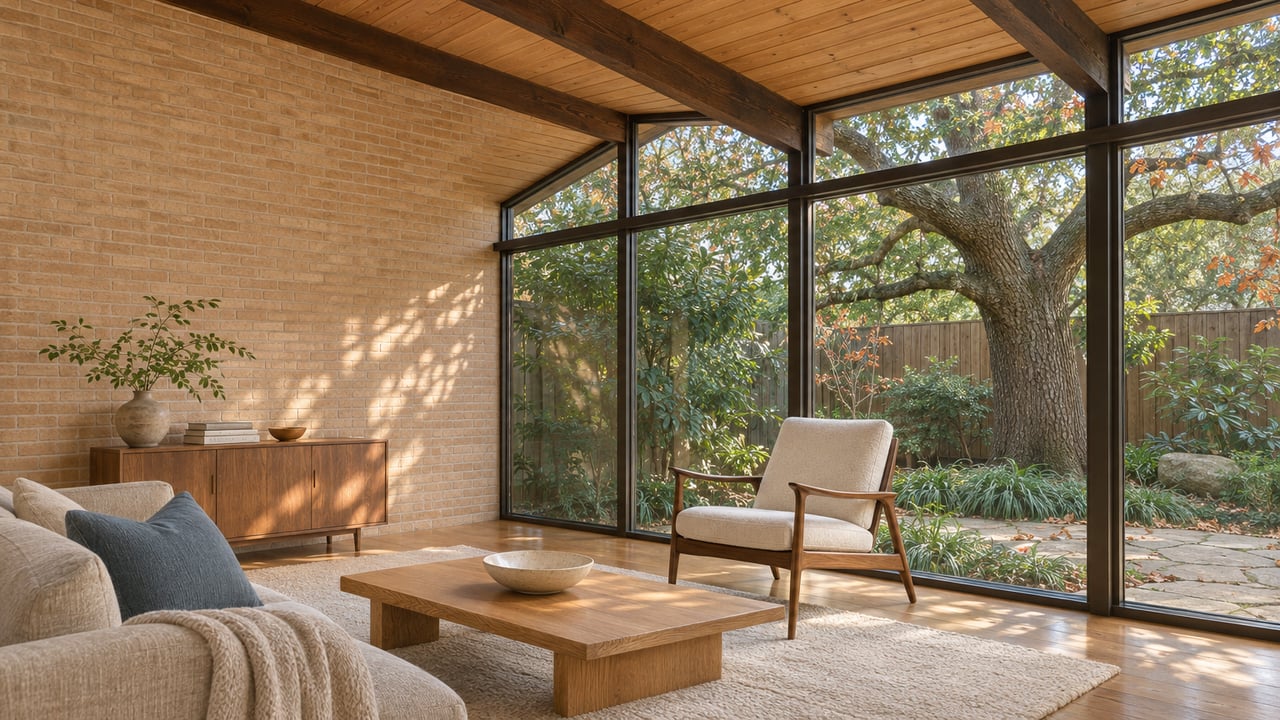
The documented work runs from 1956 to 1976. Rowley and Wilson preferred sloped, wooded, irregular lots and designed around the trees and the grade instead of clearing them, as the Advocate reported in its look back at the homes. Their signatures are low, stepped rooflines, deep eaves, exposed beams, floor-to-ceiling glass and two-way fireplaces.
A total of 147 houses spread across northeast Dallas is a small pool. Within that pool, supply depends on how long owners stay, and Ju-Nel owners tend to stay a long time.
Where to Look
Most Ju-Nels sit in a handful of pockets. About 60% of the authenticated homes are in six areas: White Rock North with 26, Eastwood Estates with 19, Lochwood Meadows with 16, Lake Ridge Estates with 11, and Sylvania Dells and Lochwood with seven each.
On the Lake Highlands side, look in the White Rock North and White Rock Valley area along Wisterwood, Chiswell, Forestridge, Covemeadow, Highedge, Royalpine and Spring Branch. Lake Ridge Estates clusters on Guildhall. The Sylvania Dells and Highland Meadows homes sit along Capri, Eden Roc and Meadowcliff. D Home's 75238 list also includes houses on Dartridge, Shoreview, Meadowglen, Cliffmere and Maplehill. South and east of there, in East Dallas, Eastwood Estates has Silverock and Vinemont, and the Lochwood pockets have Fernald and Scotsmeadow.
If you are watching for a Ju-Nel, plan to follow a few dozen specific streets rather than a whole ZIP code. Our Lake Highlands neighborhood guide and East Dallas page cover the surrounding blocks.
Listings Follow Family Timelines, Not the Market
Look at the Ju-Nels CandysDirt has covered since late 2024 and you'll see the same backstory repeatedly.
10905 Fernald was listed at $1.1 million in October 2024 after its previous owner had lived there more than 50 years. In September 2025, 10716 Meadowcliff Lane was listed at $695,000 as a single-owner house that hadn't been seen in 50 years. In December 2025, 6947 Arboreal Drive in Merriman Park was listed at $925,000 after 61 years in one family. The Eastwood Estates A-frame had been off the market for 53 years.
Other listings came up over the same stretch. 10462 Silverock, architect Vel Hawes' 1962 Ju-Nel, was listed at $849,000 in November 2024. 10226 Vinemont, the only Ju-Nel reported to have won an AIA award, was listed at $795,000 in May 2025. 9014 Capri Drive in Sylvania Dells was listed at $1.1 million in June 2025.
These are asking prices, roughly $650,000 to $1.15 million from late 2024 through 2026, not closed sales. They still show the pattern. A house that has belonged to one family since the Kennedy or Johnson administration comes to market when that family is ready, whatever mortgage rates are doing. When it does, it usually still has its original kitchen, original baths and decades-old systems.
The Price Gap Comes From the Renovation
10936 Scotsmeadow in Lochwood shows the gap most clearly. It was built in 1966 for Robert and Norma Shopland at a cost of $19,434, and one family owned it from 1972 on. In March 2025 it was listed at $650,000 and marketed as ready for a makeover.
A buyer who had already restored a Donald Speck house nearby bought it and reworked it. By CandysDirt's September 2025 account, the renovation reconfigured the bathrooms, kitchen and primary bedroom, added a half bath, updated every major mechanical system and installed Low-E windows. The finished house has 2,408 square feet, four bedrooms and two and a half baths. It went back on the market at $899,000. "We knew we wanted to keep the Midcentury Modern integrity," the renovator told CandysDirt.
The two asking prices are $249,000 apart, which is how sellers priced the same house as a project and as a finished home six months later. A buyer who takes on the project version is paying for the renovation with their own time, budget and contractors instead of through the purchase price.
9745 Wisterwood, a 1960 Ju-Nel in White Rock Valley, shows what the finished end looks like. In October 2026 it was listed at $935,000 after a 16-year ownership. The owner took the house to the studs and replaced the windows and roof. He opened the original galley kitchen and built a wall about 100 feet long and 11 feet tall so the sloped backyard could be backfilled for a pool, a covered deck and an outdoor kitchen. CandysDirt also reported that plans and engineering already exist for a suite above the garage.
What You're Buying Besides the Square Footage
The variable that's hardest to price is how much of the original house is left. D Magazine's 2024 count of houses remodeled beyond recognition suggests that a Ju-Nel with intact rooflines, glass walls and fireplace walls is rarer than the 147-house total implies. The A-frame's new owners kept the bamboo screening and courtyard entry that make the glass-walled house feel private. They replaced the linoleum galley kitchen with leathered granite and handmade green Moroccan tile. In an April 2026 profile, the Advocate reported that the owner of a Capri Circle Ju-Nel in Highland Meadows was planning a roughly 1,000-square-foot addition.
The community side counts as well. The 2025 White Rock Home Tour included a Ju-Nel among its midcentury homes as a fundraiser for the Hexter Elementary PTA, according to CandysDirt's preview. In this part of Dallas, the houses also have a public following.
For a buyer, the practical sequence goes like this. Decide whether you want a project or a finished house before one comes up. Line up an inspector and a contractor who know 1960s construction. Be ready to act within days, because the next listing may come from a family that has owned the house since before the Silver Line, LBJ or most of the surrounding streets existed. Our notes on buying a historic home in Lakewood apply to these houses, too.
Quick Answers
How many Ju-Nel homes exist? D Magazine reported in March 2024 that 147 had been authenticated, built between 1956 and 1976, and that six had been demolished.
Are they all in Lake Highlands? No. The largest clusters are in White Rock North, Lake Ridge Estates and Sylvania Dells on the Lake Highlands side, and in Eastwood Estates, Lochwood Meadows and Lochwood in neighboring East Dallas.
Do they all look alike? They share low, stepped rooflines, deep eaves, walls of glass and two-way fireplaces, and they were sited to fit sloped, wooded lots. Floor plans and sizes vary from house to house.
The next Ju-Nel on Guildhall or Wisterwood will probably come up because a long-time owner is ready to sell, so the buyers in the best position are the ones already watching those streets. If a Ju-Nel is on your list, talk with The B.A.R. Group about the streets you're watching and the kind of house you're after, project or finished, before one comes up. Contact The B.A.R. Group.